What Your Hair May Be Trying to Tell You
By Andreen Rose Cephas, LCGI, Board-Certified Trichologist
After reading my previous article, many people may find themselves asking:
“How do I know if my hair loss is normal or if it could be signaling something more?”
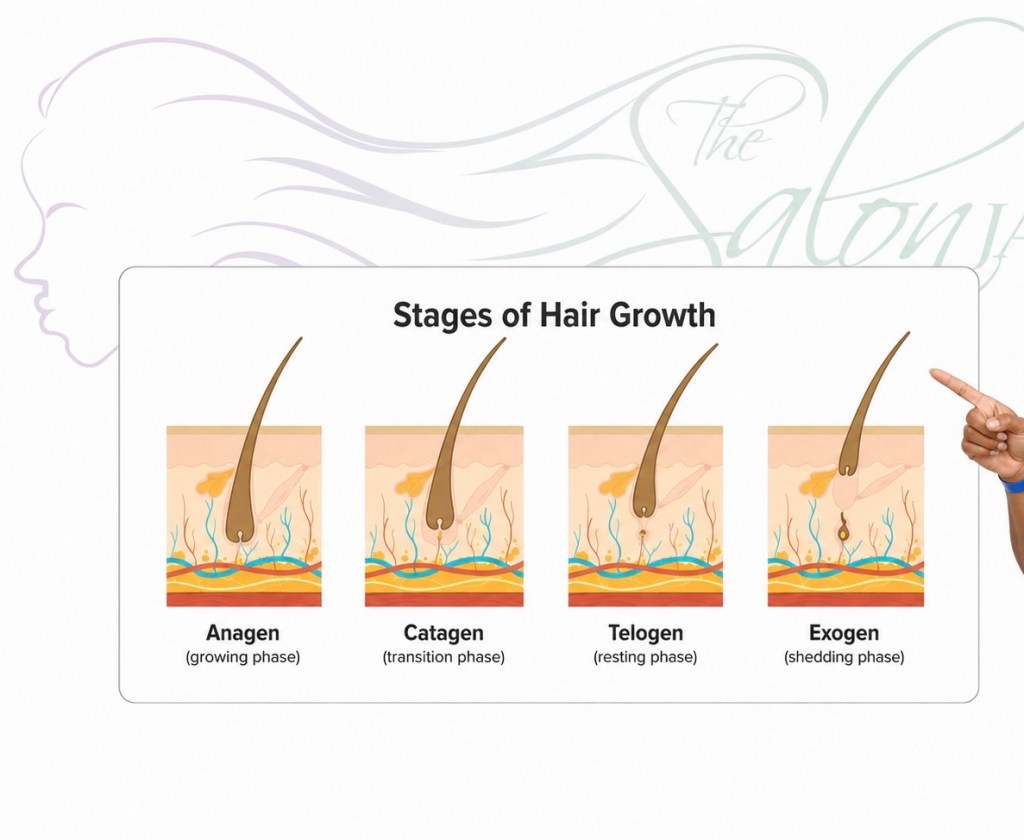
The truth is that not every strand of hair found on your pillow, in your brush, or in the shower is cause for alarm. Hair naturally sheds as part of its normal growth cycle.
However, there are times when the hair begins to communicate that something within the body may require attention.
The challenge is knowing how to recognize the difference.
When Hair Begins to Change
Hair concerns rarely appear overnight.
More often, people notice subtle changes first.
Perhaps your ponytail feels smaller than it once did.
Maybe your part appears wider in photographs.
You may notice that your edges are becoming thinner or that your hair no longer seems to grow as it once did.
Others describe their hair as feeling weaker, drier, or less vibrant than before.
These changes may seem insignificant at first, but they often provide important clues.
Signs That Deserve Attention
While only a proper assessment can determine the cause of hair loss, there are certain signs that should never be ignored.
These include:
• Sudden or excessive shedding
• Visible thinning or widening of the part line
• Receding hairline or thinning edges
• Persistent scalp irritation or inflammation
• Hair breakage that appears unusual
• Bald patches or areas of reduced density
• Hair loss following illness, stress, surgery, or major life changes
The appearance of one sign does not necessarily indicate a serious condition, but it does suggest that further evaluation may be beneficial.
Looking Beyond the Hair
One of the most important lessons I share with clients is that hair loss is rarely just about hair.
The body functions as an interconnected system.
Changes in physical health, emotional wellbeing, nutrition, hormones, medications, and lifestyle can all influence the health of the scalp and follicles.
This is why a professional assessment often involves far more than looking at the hair itself.
The goal is to understand the whole person.
The Cost of Waiting
One of the most common statements I hear is:
“I noticed it months ago, but I thought it would get better on its own.”
Sometimes it does.
Sometimes it doesn’t.
Unfortunately, many forms of hair loss respond best when identified early.
Waiting until significant thinning has occurred can make treatment and recovery more challenging.
Awareness is not about creating fear.
It is about creating opportunity.
The earlier concerns are recognized, the sooner appropriate action can be taken.
A Different Conversation About Hair
For many years, conversations about hair focused almost exclusively on appearance.
Today, we are beginning to understand that hair can provide valuable insight into overall wellness.
Perhaps it is time we stop asking only,
“What product should I use?”
and begin asking,
“What might my hair be trying to tell me?”
Because healthy hair is often the result of a healthy foundation.
And sometimes the greatest act of hair care is paying attention.
About the Author
Andreen Rose Cephas, LCGI, is a Board-Certified Trichologist, Educator, and Founder of ARC Institute. Through her work in hair wellness and professional education, she advocates for a holistic approach to understanding hair and scalp concerns.
Continue the Conversation
Interested in learning how beauty professionals can play a greater role in recognizing hair and scalp concerns?
Explore the Advanced Hair Wellness Advisor (AHWA) Program through ARC Institute and discover how wellness awareness is transforming the future of hair care.