Nutritional Deficiencies and Hair Loss: Understanding the Signs and Treating Hair from the Inside Out
By Althea Gooden, Certified Trichologist
Healthy hair begins long before it reaches the scalp. Every hair follicle depends on a continuous supply of vitamins, minerals, protein, healthy fats, and oxygen to produce strong, healthy strands. When your body lacks essential nutrients, your hair is often one of the first places where the signs begin to show.
Many people spend hundreds of dollars on shampoos and oils without realizing the underlying cause of their hair problem may be nutritional. As a professional Trichologist, my goal is to identify the root cause of your hair loss through a comprehensive consultation, scalp analysis, lifestyle assessment, and nutritional evaluation before recommending a personalized treatment plan.
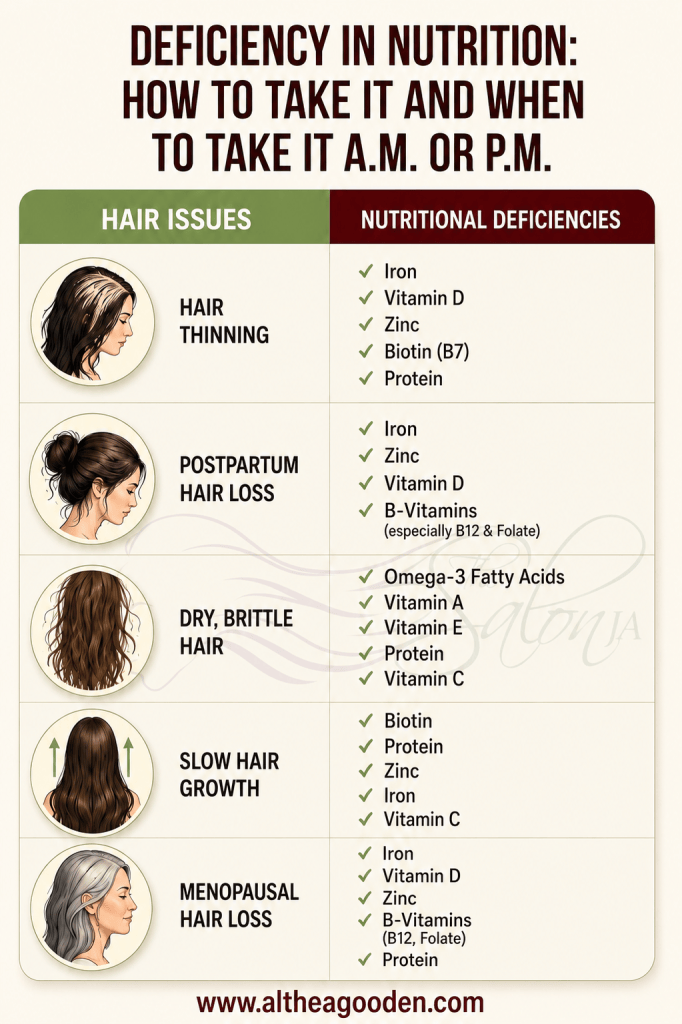
Hair Thinning
Common Nutritional Deficiencies
- Iron
- Vitamin D
- Zinc
- Biotin (Vitamin B7)
- Protein
What to Look For
- Hair appears less dense.
- Increased shedding while washing or brushing.
- Widening of the hair part.
- Fine, weak hair strands.
- Hair lacks volume.
Why It Happens
Hair follicles require oxygen and nutrients to remain in the active growth phase. Low iron, protein deficiency, or inadequate Vitamin D can reduce healthy hair production.
Professional Trichologist Treatment Plan
- Detailed scalp examination using a polarized trichoscope.
- Hair and scalp history.
- Nutritional assessment.
- Laboratory testing if indicated.
- Professional scalp therapy.
- Medical-grade hair care products.
- Nutritional supplementation.
- Lifestyle and dietary modifications.
- Progress monitoring every 8–12 weeks.
Postpartum Hair Loss
Common Nutritional Deficiencies
- Iron
- Zinc
- Vitamin D
- Vitamin B12
- Folate
What to Look For
- Excessive shedding beginning 2–4 months after childbirth.
- Hair collecting in the shower.
- Noticeable thinning around the temples and hairline.
- Reduced hair volume.
Why It Happens
Following pregnancy, estrogen levels return to normal, causing many hairs to enter the shedding phase simultaneously. Nutritional deficiencies can worsen this natural process.
Professional Trichologist Treatment Plan
- Scalp analysis.
- Nutritional counselling.
- Iron-rich dietary recommendations.
- Vitamin replacement if deficient.
- Gentle scalp stimulation therapy.
- Low-level laser therapy where appropriate.
- Customized home-care regimen.
Dry, Brittle Hair
Common Nutritional Deficiencies
- Omega-3 Fatty Acids
- Vitamin A
- Vitamin E
- Protein
- Vitamin C
What to Look For
- Hair breaks easily.
- Rough texture.
- Split ends.
- Lack of shine.
- Difficulty retaining length.
Why It Happens
The hair shaft requires healthy fats, proteins, and antioxidants to remain flexible and hydrated. Without these nutrients, hair becomes dry, fragile, and prone to breakage.
Professional Trichologist Treatment Plan
- Moisture restoration program.
- Protein balance treatments.
- Scalp hydration therapy.
- Nutritional supplementation.
- Deep conditioning protocol.
- Recommendations for reducing heat and chemical damage.
Slow Hair Growth
Common Nutritional Deficiencies
- Biotin
- Protein
- Zinc
- Iron
- Vitamin C
What to Look For
- Hair seems “stuck” at one length.
- Slow regrowth after haircuts.
- Weak new hairs.
- Frequent breakage.
Why It Happens
Hair grows approximately half an inch each month under healthy conditions. Nutritional deficiencies slow cellular activity within the follicle, reducing growth potential.
Professional Trichologist Treatment Plan
- Follicle health assessment.
- Microscopic scalp evaluation.
- Growth stimulation therapies.
- Customized nutritional support.
- Scalp massage techniques.
- Professional hair growth products.
- Routine progress photography.
Menopausal Hair Loss
Common Nutritional Deficiencies
- Iron
- Vitamin D
- Zinc
- Vitamin B12
- Folate
- Protein
What to Look For
- Diffuse thinning.
- Widening hair part.
- Loss of density around the crown.
- Dry scalp.
- Reduced hair quality.
Why It Happens
Hormonal changes during menopause affect the hair growth cycle. Combined with nutritional deficiencies, follicles may produce finer, weaker hairs.
Professional Trichologist Treatment Plan
- Complete consultation.
- Hormonal history review.
- Scalp microscopy.
- Nutritional recommendations.
- Professional scalp detoxification.
- Hair restoration program.
- Ongoing follow-up to monitor improvement.
Why Treat Hair Loss from the Inside Out?
Hair treatments applied to the scalp can support healthy growth, but they work best when combined with proper nutrition. Healthy hair requires healthy follicles, and healthy follicles depend on a healthy body.
At The Salon JA, we believe in treating the whole person—not just the hair. Every treatment plan is designed to address both internal and external factors affecting hair growth.
Our Comprehensive Hair Restoration Approach Includes:
- Professional Trichology Consultation
- Polarized Scalp Microscopy
- Hair Density Assessment
- Medical History Review
- Nutritional Evaluation
- Personalized Hair Care Regimen
- Professional Scalp Treatments
- Home Maintenance Program
- Follow-up Progress Evaluations
Remember, healthy hair starts beneath the surface. If you’re experiencing hair thinning, excessive shedding, slow growth, or scalp concerns, don’t guess—get a professional assessment to identify the root cause.
Book your professional Trichology consultation today and begin your journey toward healthier hair from the inside out.