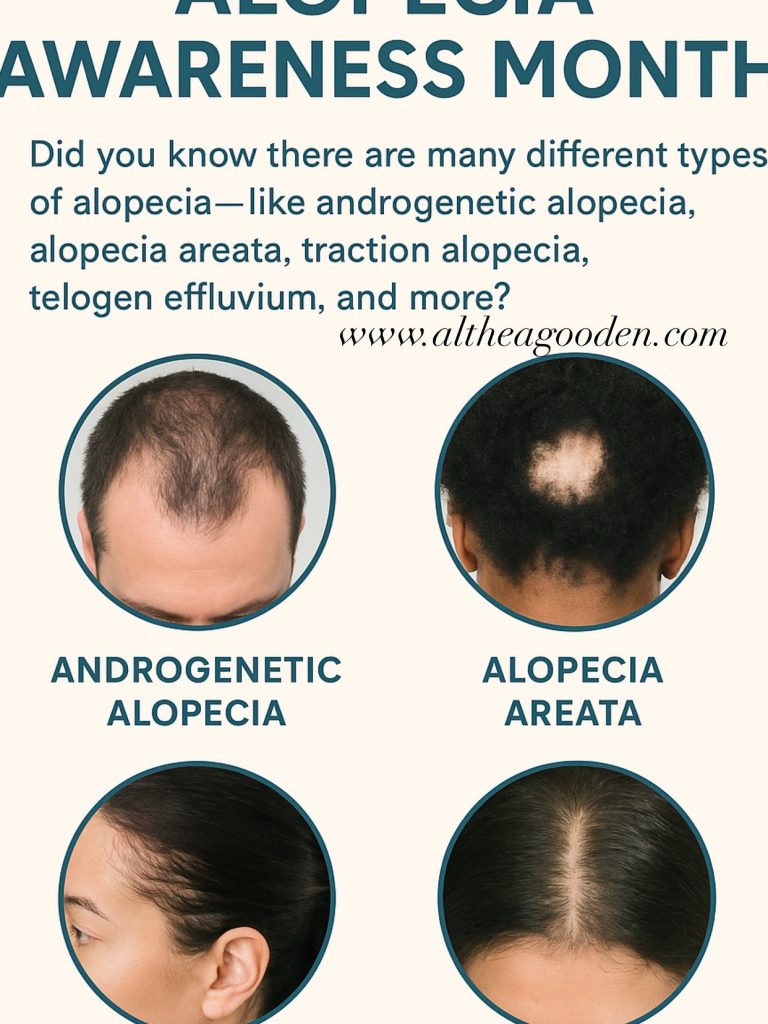
September marks Alopecia Awareness Month, a time to shed light on a condition that affects millions of men, women, and even children worldwide. Alopecia is more than just “hair loss” it is a broad term that covers many different types of scalp and hair disorders, each with its own causes, patterns, and treatments. Understanding the differences helps us create awareness, reduce stigma, and provide support for those living with it.
The Different Types of Alopecia
1. Androgenetic Alopecia (Male and Female Pattern Hair Loss)
This is the most common form, often referred to as “pattern baldness.” It is largely genetic and connected to hormonal changes, especially dihydrotestosterone (DHT). In men, it often presents as a receding hairline and crown thinning, while in women, it usually causes overall hair thinning across the scalp.
2. Alopecia Areata
An autoimmune disorder where the immune system mistakenly attacks hair follicles, leading to sudden patchy bald spots. In some cases, it can progress to total scalp hair loss (Alopecia Totalis) or complete body hair loss (Alopecia Universalis).
3. Traction Alopecia
Caused by continuous pulling or tension on the hair, often from tight hairstyles such as braids, ponytails, or extensions. Early intervention and changing hair practices can prevent permanent follicle damage.
4. Cicatricial (Scarring) Alopecia
This rare but serious type involves permanent destruction of the hair follicle due to inflammation or scarring on the scalp. It requires early diagnosis by a Trichologist or Dermatologist to prevent progression.
5. Telogen Effluvium
A temporary shedding that occurs when many hairs enter the resting phase of the growth cycle. It can be triggered by stress, illness, medication, or hormonal changes. Most often, hair will recover once the underlying cause is addressed.
6. Postpartum Alopecia
Many women experience shedding after pregnancy due to hormone fluctuations. While usually temporary, it can be distressing, and gentle scalp care is essential during recovery.
7. Chemotherapy-Induced Alopecia
Cancer treatments often cause temporary but significant hair loss. With the right scalp health strategies, regrowth can be supported once treatments are complete.
Caring for the Aging Scalp
As we bring awareness to alopecia, it’s also important to focus on scalp aging, since a healthy scalp is the foundation for healthy hair. The Althea Gooden Anti-Aging Serum is specially formulated to nourish the scalp, support follicle strength, and maintain balance as we age. With powerful botanicals and scalp-friendly ingredients, it helps maintain elasticity, hydration, and overall scalp wellness making it a valuable part of your hair and scalp care routine.
Lifelong Tips for Hair and Scalp Health
For essential, science-based guidance, refer to The Hair and Scalp Health Do’s and Don’ts: Essential Tips for Lifelong Vibrancy & Wellness by Althea Gooden, Certified Trichologist. This resource is packed with practical advice on preventing hair and scalp disorders, protecting your follicles, and maintaining lifelong hair vitality.
???? Get your copy on Amazon here: The Hair and Scalp Health Do’s and Don’ts
???? Learn more at: www.altheagooden.com
Final Word
Alopecia Awareness Month reminds us that hair loss comes in many forms, and no two experiences are the same. By understanding the different types of alopecia and taking proactive steps in scalp care, we empower ourselves and support those on their hair health journey. With professional guidance, the right products, and essential wellness habits, vibrant hair and scalp health can be achieved at every stage of life.